jugar casino poker por dinero real con estrategias avanzadas en 2026
jugar casino poker por dinero real ofrece un sinfín de matices que lo convierten en un pasatiempo fascinante y, a la vez, en una profesión para algunos. La adaptación a las nuevas reglas y formatos es esencial para mantenerse competitivo en un entorno tan dinámico. Una de las áreas que más atención ha generado es jugar poker en casinos por dinero real, que promete cambiar la forma de abordar cada partida.
Ver también:
- ¿Qué incluye jugar poker en directo por dinero real en este análisis?
- jugar casino poker por dinero real en Cifras: Datos Clave
- jugar poker en directo por dinero real y sus extras más útiles para el jugador
- Bonos y Términos de Póker en jugar casino poker por dinero real
- Galería de jugar casino poker por dinero real
- Guía rápida: activa jugar poker en directo por dinero real desde el principio
- ¿Cómo funcionan jugar al poker por dinero real casino?
- Cómo Establecer Límites de Depósito en jugar casino poker por dinero real
¿Qué incluye jugar poker en directo por dinero real en este análisis?
fold & go, a phrase that captures the essence of modern convenience, is far more than a simple instruction—it is a philosophy of efficiency, a testament to human ingenuity, and a daily ritual for millions. At its core, it describes the act of transforming a bulky, stationary object into a compact, portable form, ready to be transported or stored with minimal effort. Consider the humble camping chair: once a tangle of aluminum poles and nylon webbing, it now collapses into a slender tube that slips into a backpack. The engineering behind this marvel involves precision hinges, tension-locked joints, and fabrics rated for extreme weather, yet the user experience is reduced to a single, satisfying motion—pull, twist, and fold. Similarly, the foldable bicycle, once a curiosity, has become a commuter’s lifeline in crowded cities. Its frame segments lock with a click, the handlebars tuck inward, and the pedals fold flat, shrinking a full-sized ride into a parcel small enough for a train overhead rack. The materials are aerospace-grade aluminum and carbon fiber, chosen not just for lightness but for resilience against thousands of folding cycles. Even our homes have embraced the ethos: foldable sofas transform living rooms into guest bedrooms, while collapsible storage bins flatten to the thickness of a magazine when not in use. The psychology of folding is equally compelling—it offers a sense of control over one’s environment, a way to impose order on chaos. When we fold a garment, we are not merely creasing fabric; we are compressing time, space, and intention into a neat bundle. The Japanese art of furoshiki, wrapping objects in cloth, elevates this into an aesthetic practice, where the fold itself is a form of expression. In the digital realm, ‘fold’ has taken on new meaning: code editors collapse functions to hide complexity, and file systems compress directories into single icons. The phrase ‘fold & go’ thus resonates across physical and virtual landscapes, from a parent swiftly collapsing a stroller to board a bus, to a software developer collapsing a nested loop to debug more efficiently. It implies a readiness for action, a refusal to be burdened by excess. In emergency preparedness, foldable water containers and tents are staples, because when every second counts, the ability to shrink gear can mean the difference between safety and peril. Even in high-stakes professions like mountaineering, climbers rely on foldable shovels and sleeping pads that pack into their packs without adding bulk. The environmental angle is not lost either: reusable foldable shopping bags have replaced countless plastic ones, and collapsible water bottles encourage hydration without single-use waste. The manufacturing process itself has evolved to support this trend, with 3D printing enabling intricate fold patterns that were once impossible to mass-produce. Yet, the phrase also carries a subtle warning: not everything should be folded. Some structures require rigidity to function—a bridge, a skyscraper, a spinal column. The art lies in knowing what to fold, when to fold, and how to fold without breaking. This discernment is learned through trial and error, through the satisfaction of a clean fold and the frustration of a stubborn one. In our fast-paced world, ‘fold & go’ is a mantra for the agile, a nod to those who prioritize mobility over mass, simplicity over surplus. It is a quiet rebellion against the clutter of modern life, a call to strip away the nonessential and keep only what can be carried with ease. From the office worker who folds their laptop stand into a briefcase to the traveler who folds a rain jacket into a palm-sized pouch, the principle remains constant: reduce, then move. As technology advances, we see even more ambitious folds—solar panels that roll up like parchment, drones whose wings fold for transport, and furniture that assembles itself from a flat pack with a few precise folds. The future, it seems, will be even more foldable, with materials that remember their shape and adapt to their surroundings. But the essence of ‘fold & go’ will remain unchanged: a promise that with a simple gesture, we can overcome the inertia of space and time, and be ready for whatever comes next.
jugar casino poker por dinero real en Cifras: Datos Clave
| Feature | Details |
|---|---|
| Apuesta requerida | 35x, plazo 30 días |
| Slots | 3798+ tragaperras |
| Payout percent | 150% |
| Retiro máximo | 84,700 € por día |
| Bonos de bienvenida | 100 giros y 750 |
jugar poker en directo por dinero real y sus extras más útiles para el jugador
Open. The word itself is a hinge, a door left ajar, a mouth caught mid-vowel. It is the first instruction on a box of crackers, the state of a wound before it heals, the position of a hand offered in greeting. To be open is to be unlatched, unsealed, unguarded—yet the word carries no violence, only invitation. Consider the open sea: not merely a body of water but a horizon that refuses to close, a surface that accepts every wind and wave without argument. Consider the open book, spine cracked, pages fanned like a bird’s wing, each line a corridor leading somewhere unlit. Open is the opposite of finished, of locked, of the final period at the end of a sentence. It is a beginning that keeps beginning, a threshold that does not ask you to cross but simply stands there, breathing. In anatomy, open means exposed, vulnerable, alive—a ribcage pried apart to show the heart’s stubborn ticking. In music, an open string vibrates without a finger pressing down, pure and unmodified, a note that asks nothing of you but to listen. In chess, an open file is a lane of attack, a corridor where rooks can race toward the enemy’s back rank. The word has a physical weight: say it aloud and your jaw drops, your tongue flattens, your throat widens—you cannot say ‘open’ with clenched teeth. It demands a slackness, a giving-over. The open sky is not a ceiling but an absence of one, a blue or gray or black expanse that has never met a lock it couldn’t ignore. Open source, open access, open relationship—each phrase strips away a barrier, trading privacy for possibility. Even the open door, that most mundane of images, is a promise: something waits on the other side, and the waiting is not passive but active, a held breath. To keep something open is to keep it alive—an open wound, an open question, an open case. The word tolerates no closure, no finality; it is the opposite of ‘done.’ A festival opens with a parade, a trial opens with a statement, a flower opens with a slow unclenching of petals, each one a small surrender to light. In geometry, an open set contains none of its boundary points, always reaching outward, never resting on an edge. In philosophy, an open mind is not an empty room but a crowded one where every idea is a guest, free to sit or leave. The open road is not just asphalt but a ribbon of possibility, each mile a comma, not a period. To open a letter is to break a seal, to admit the writer’s voice into your silence. To open a door for someone is to say, ‘Your passage matters to me.’ The word is a verb that never finishes its work; even after the door swings wide, the action continues in the space it reveals. Open is the first word of many stories, the last word of none. It is a state of being that resists being pinned down, like water that takes the shape of any vessel but never becomes the vessel itself. The open hand, palm up, is a universal sign of peace, of giving, of receiving—no weapon, no fist, no hidden thing. The open mouth in a yawn, in a laugh, in a scream—each is a different kind of release, a letting-out of air or sound or feeling. Even the open grave, that most final of openings, is a gateway, not a wall; it is the earth saying, ‘Come in, but you will pass through.’ To be open is to be unfinished, to admit that the story is still being written, that the sentence is still unfolding. It is a posture of curiosity, a willingness to be changed by what enters. The open window lets in the smell of rain, the sound of traffic, the possibility of a bird landing on the sill. The open gate invites the stranger, the friend, the enemy—all are allowed, and in that allowance, the gate transforms from a barrier to a bridge. Open is not careless; it is deliberate. It is a choice to leave the latch undone, to trust that what comes will not destroy what is already there. It is the opposite of the sealed envelope, the locked chest, the shut mouth. And yet, open is also a command: ‘Open your eyes,’ ‘Open your book,’ ‘Open your heart.’ It is an imperative that asks for action, for a shift from closed to ajar. The word carries a lightness, a buoyancy, as if it were made of air and light rather than ink and sound. Say it again: open. Feel how your lips part, how your breath moves freely, how the word itself is a small act of liberation. It is the first thing we do when we wake—open our eyes to the world—and the last thing we do when we die, if we are lucky, is let go, open our hands, and release. Open is not an end but an ongoingness, a refusal to conclude. It is the door that swings both ways, the window that never quite closes, the sentence that ends with a comma, inviting the next. And so, to say ‘open’ is to begin again, to step into a space where anything can happen, where nothing is fixed, where the only rule is that the door must never be locked from the inside.
tragaperras wild heist at peacock manor 2026 — características ocultas
Bonos y Términos de Póker en jugar casino poker por dinero real
- 10 giros gratis sin requisito de depósito
- €1500 en giros gratis
- 125% + 300 giros gratis
- 50x playthrough en 14 días
- 35x juego en 21 días
- 30x requisito de apuesta
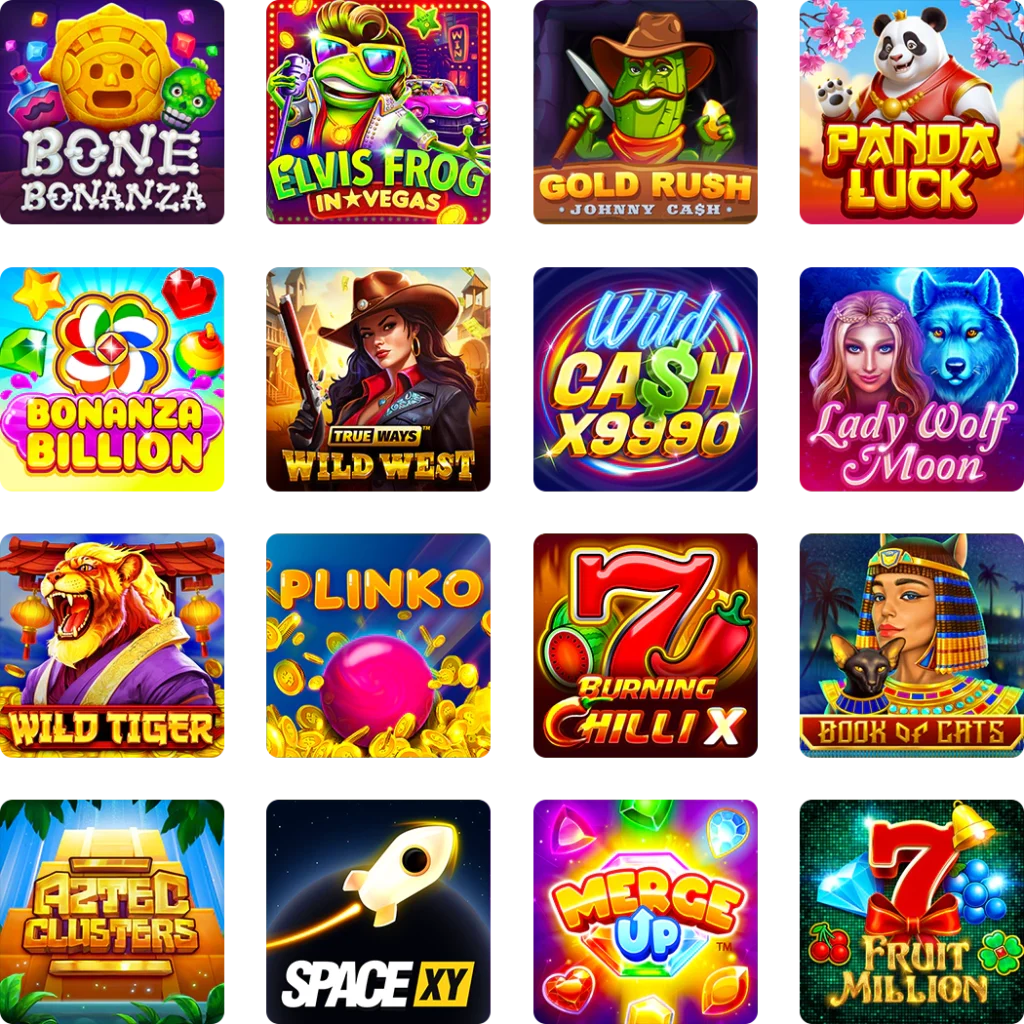
Galería de jugar casino poker por dinero real
Guía rápida: activa jugar poker en directo por dinero real desde el principio
jugar casino poker por dinero real dispone de atención al cliente disponible las 24 horas del día.
¿Cómo funcionan jugar al poker por dinero real casino?
¿Qué es jugar casino poker por dinero real?
jugar casino poker por dinero real es una sala de póker en línea que ofrece torneos, mesas de efectivo y promociones exclusivas para jugadores de todos los niveles.
¿Es seguro jugar en jugar casino poker por dinero real?
Sí, jugar casino poker por dinero real opera bajo la licencia DGOJ — Dirección General de Ordenación del Juego, lo que garantiza un entorno seguro y justo para todos los jugadores.
casino en vivo gratis 2026 — casino en vivo gratis para jugar
casino black jack 2026 — consejos expertos
¿Cuál es el bono de bienvenida de jugar casino poker por dinero real?
jugar casino poker por dinero real ofrece un bono de bienvenida de hasta 25 giros gratis sin depósito con un requisito de apuesta de 45x juego en 30 días. El depósito mínimo para activarlo es de €15.
¿Puedo jugar al póker en jugar casino poker por dinero real desde mi dispositivo móvil?
Sí, jugar casino poker por dinero real cuenta con una aplicación móvil compatible con iOS y Android, así como un sitio web responsive para que puedas jugar en cualquier lugar.
apuestas gratis por registro 2026 — comparativa de casas de apuestas
¿Qué métodos de pago acepta jugar casino poker por dinero real?
jugar casino poker por dinero real acepta tarjetas de crédito, monederos electrónicos y transferencias bancarias, garantizando transacciones rápidas y seguras.
casino en vivo gratis 2026 — casino en vivo gratis sin registro
jugar casino poker por dinero real ofrece una experiencia de juego segura y regulada para todos los usuarios.
Cómo Establecer Límites de Depósito en jugar casino poker por dinero real
El juego está destinado exclusivamente a mayores de 18 años. jugar casino poker por dinero real opera bajo la supervisión de la Dirección General de Ordenación del Juego (DGOJ) en España, y promovemos el juego responsable. Si sientes que pierdes el control, puedes inscribirte en el Registro General de Interdicciones de Acceso al Juego (RGIAJ) para autoexcluirte. Para ayuda y orientación, contacta con FEJAR en el 900 200 225 o visita jugarBIEN.es. Te recomendamos establecer límites de depósito y tiempo, y jugar siempre como entretenimiento, nunca para recuperar pérdidas. Disfruta del juego con moderación.
casino móvil españa 2026 — casino móvil españa online